
Hair Guide
Monsoon Hair Care Routine for Tweens & Teens in India

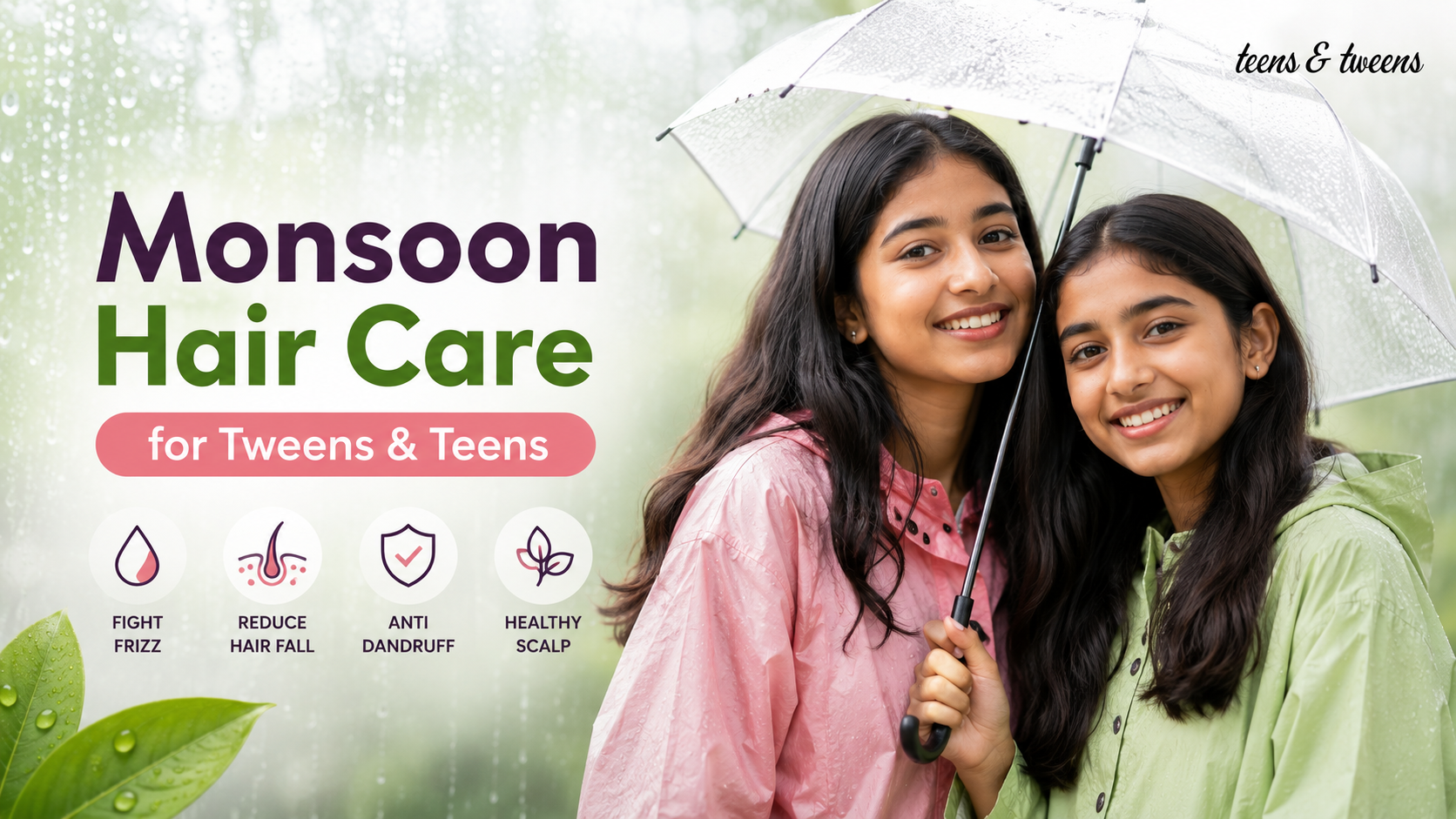
Monsoon Hair Care Routine for Tweens & Teens in India
The arrival of monsoon brings welcome relief from the summer heat, but it also introduces a new set of hair problems. High humidity, rainwater, sweat, pollution, and damp weather can leave your child’s hair frizzy, greasy, and difficult to manage. Many parents also notice increased dandruff or hair shedding during this season.
The good news is that you don’t need an elaborate routine. A few simple habits and the right products can help keep young hair healthy throughout the rainy season.
Here’s an easy monsoon hair care for kids India guide designed specifically for tweens and teenagers.
Why Does Hair Become Problematic During Monsoon?
Monsoon weather creates the perfect environment for scalp issues.
Humidity causes the hair cuticle to swell, making hair appear frizzy and unmanageable. Excess moisture also encourages sweat and oil build-up on the scalp, which may lead to dandruff, itchiness, and unpleasant odours.
Children and teenagers are especially affected because hormonal changes during puberty often increase oil production, making the scalp even more vulnerable.
Step 1: Wash Hair Regularly (But Don’t Overwash)
During monsoon, sweat, dust, and humidity collect on the scalp much faster.
Washing hair 2–3 times a week is usually sufficient for most tweens and teens. Those with very oily scalps or active outdoor lifestyles may need an extra wash.
Choose a gentle, pH-balanced shampoo instead of harsh cleansing formulas that strip away natural oils.
A mild shampoo helps remove dirt while maintaining the scalp’s natural protective barrier.
Step 2: Use Conditioner Every Wash
Many parents skip conditioner for children, believing it makes hair greasy.
In reality, conditioner helps smooth the hair cuticle, making hair easier to comb and reducing frizz caused by humidity.
Apply conditioner only to the mid-lengths and ends, avoiding the scalp.
This simple habit can significantly improve hair texture during the rainy season.Step 3: Never Tie Wet Hair
One of the biggest monsoon mistakes is tying wet or damp hair into a ponytail or braid.
Moisture trapped against the scalp creates an ideal environment for dandruff-causing microbes and can leave the scalp itchy and uncomfortable.
Always dry hair thoroughly before tying it.
If using a hair dryer, choose the cool or low-heat setting.
Step 4: Control Frizz Naturally
Humidity is the biggest reason behind unruly hair during monsoon.
Some effective frizzy hair monsoon tips include:
- Use a wide-tooth comb instead of brushing aggressively.
- Avoid excessive heat styling.
- Apply a lightweight leave-in serum on damp hair.
- Use a nourishing hair mask once a week.
These habits help keep hair smoother without weighing it down.
Step 5: Don’t Ignore Dandruff
Monsoon often worsens dandruff because the scalp remains damp for longer periods.
If your child develops persistent flakes or itching, switch to a gentle anti dandruff monsoon shampoo teens can use safely, preferably one designed for young scalps.
Avoid using strong medicated shampoos unless recommended by a dermatologist.
If dandruff persists for several weeks, seek professional advice.
Step 6: Support Healthy Hair with Good Nutrition
Healthy hair starts from within.
During monsoon, encourage children to eat:
- Fresh fruits
- Leafy vegetables
- Eggs
- Paneer
- Lentils
- Nuts and seeds
- Plenty of water
Protein, iron, zinc, and vitamins support stronger hair growth and may help reduce seasonal shedding.
Step 7: Protect Hair from Rainwater
Rainwater often mixes with dust, pollution, and airborne impurities before reaching your hair.
If your child gets drenched:
- Rinse hair with clean water as soon as possible.
- Shampoo if the scalp feels dirty.
- Dry the scalp completely before sleeping.
This simple habit helps reduce irritation and product build-up.
Is Hair Fall Normal During Monsoon?
Many parents worry when they notice more hair in the shower drain during rainy months.
Some seasonal shedding is common because humidity weakens hair strands and increases breakage. Stress, nutritional deficiencies, poor scalp hygiene, and dandruff can also contribute to rainy season hair fall kids experience.
However, if hair loss becomes excessive, creates visible thinning, or continues for several months, consult a dermatologist.
A Simple Weekly Monsoon Hair Care Routine
Here’s an easy schedule that works well for most tweens and teens:
Monday: Shampoo + Conditioner
Wednesday: Shampoo (if scalp is oily)
Saturday: Shampoo + Conditioner + Hair Mask
Daily:
- Comb gently.
- Dry hair completely.
- Avoid sharing combs and towels.
- Keep pillowcases clean.
Consistency matters far more than using multiple products.
Monsoon Hair Care Checklist
Before the rainy season peaks, make sure your child’s hair care routine includes:
✔ Mild pH-balanced shampoo
✔ Lightweight conditioner
✔ Weekly nourishing hair mask
✔ Wide-tooth comb
✔ Clean towel
✔ Regular scalp cleansing
✔ Healthy diet and hydration
A simple “monsoon hair kit” with these essentials can make daily care easier and help prevent seasonal hair concerns before they start.
Final Thoughts
The Indian monsoon can be challenging for young hair, but it doesn’t have to be overwhelming. A consistent routine focused on gentle cleansing, proper conditioning, scalp hygiene, and good nutrition can keep frizz, dandruff, and seasonal hair fall under control.
Instead of switching between multiple products, choose hair care specifically formulated for growing hair. Mild, pH-balanced products with nourishing ingredients are often all tweens and teens need to maintain healthy, manageable hair throughout the rainy season.
With the right habits, your child can enjoy the monsoon without worrying about messy hair days.