
Hair Guide
Nutritional Deficiency Hair Fall in Teens: What Parents Should Know

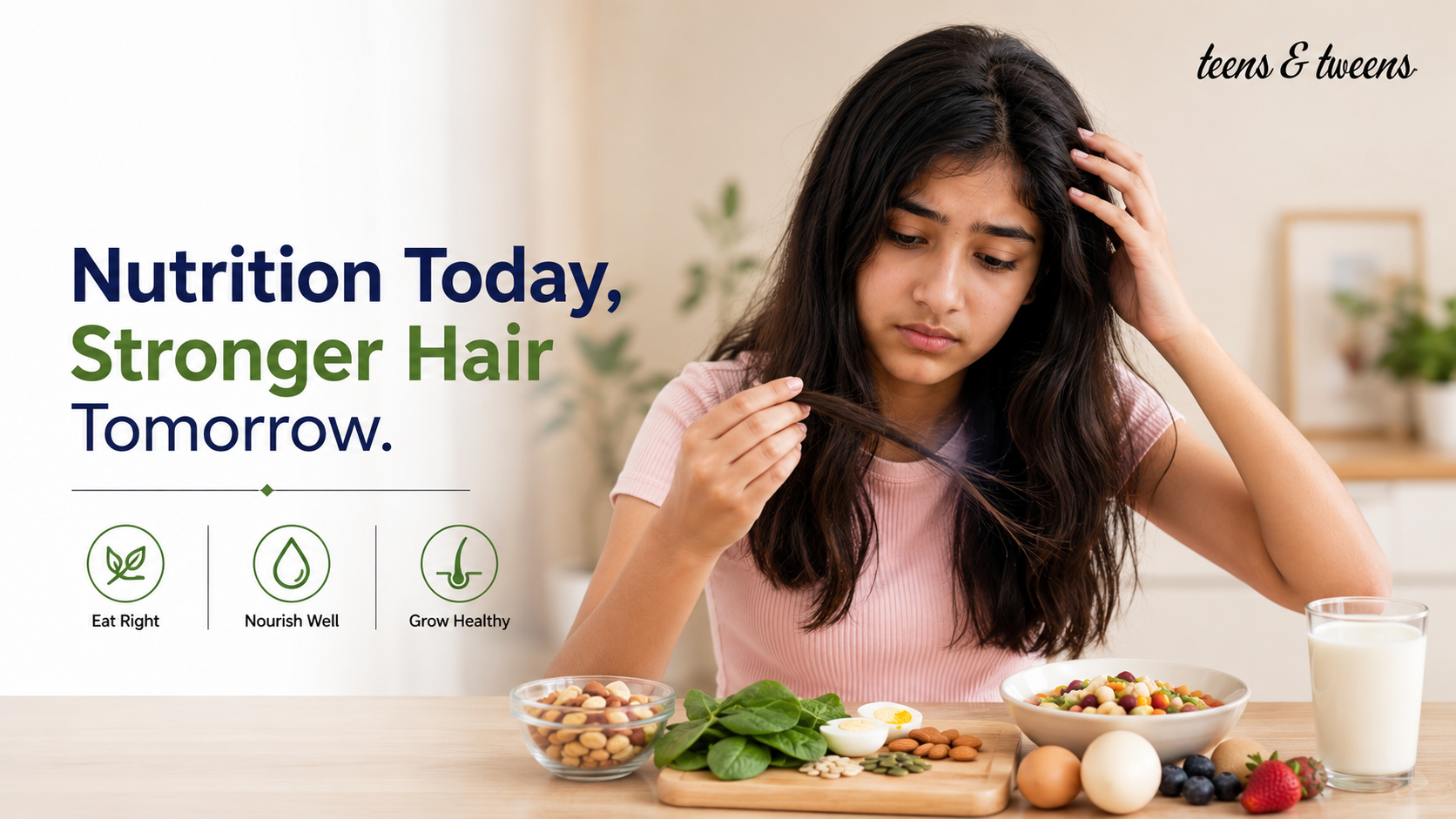
Is Your Teen’s Hair Fall Related to Nutrition?
Finding extra hair on your teenager’s pillow, hairbrush or bathroom floor can be worrying. While some daily hair shedding is completely normal, noticeable or persistent hair fall can sometimes be linked to what is happening inside the body.
One possible factor is nutritional deficiency hair fall in teens. During adolescence, the body is growing rapidly and nutritional needs increase. If a teenager regularly skips meals, follows a restrictive diet, loses weight quickly or has an unbalanced diet, they may not get enough of certain nutrients needed for normal hair growth.
But nutrition is only one possible cause of teenage hair fall. Puberty, stress, illness, scalp conditions, genetics and hair practices can also play a role.
So before reaching for a hair supplement, it is important to understand the bigger picture.
How Can Nutrition Affect Teen Hair?
Hair follicles are among the body’s most active tissues. They require energy and nutrients to support normal growth.
When the body does not receive enough nutrients—or when there is a confirmed deficiency—hair growth may be affected. In some cases, this can result in increased shedding or changes in hair quality.
This does not mean that every teenager who loses hair has a nutritional deficiency. Hair fall cannot be diagnosed simply by looking at the diet.
A doctor may consider the teenager’s symptoms, eating habits, health history and, when appropriate, recommend blood tests.
Iron Deficiency and Hair Loss in Teenagers
Iron is an important mineral involved in several processes in the body. Low iron stores have been associated with certain types of hair shedding.
This is particularly worth discussing with a doctor when a teenager has other possible signs of iron deficiency, such as tiredness, weakness or difficulty concentrating.
Teenagers who menstruate may have additional iron requirements because of blood loss during periods. However, parents should not assume that hair fall automatically means low iron.
If iron deficiency hair loss in teenagers is suspected, a healthcare professional can decide whether testing is appropriate.
Taking iron supplements without medical advice is not recommended. Too much iron can also be harmful.
What About Vitamin B12?
Vitamin B12 supports normal red blood cell formation and the nervous system. Inadequate B12 intake or absorption can lead to health problems.
Parents often search for vitamin B12 hair fall teen when they notice increased shedding. However, hair loss has many possible causes, and B12 deficiency should not be assumed simply because a teenager is losing hair.
Teenagers following vegetarian or vegan diets may need particular attention to reliable sources of vitamin B12, depending on their overall diet. If there is concern about inadequate intake, discuss it with a doctor or registered dietitian.
Can Vitamin D Be Linked to Hair Fall?
Vitamin D is important for several functions in the body, and researchers have studied possible relationships between vitamin D status and different types of hair loss.
However, this does not mean that every teenager with hair fall has vitamin D deficiency—or that taking vitamin D will automatically stop hair shedding.
If a doctor suspects a nutritional or medical problem, they can decide whether testing is appropriate rather than relying on supplements without a confirmed need.
Why Teenagers May Not Get Enough Nutrients
Teenagers have busy schedules. Breakfast may be skipped before school, lunch may be rushed, and sports practice or tuition can push dinner later.
Some teens may also avoid certain foods because of preferences, dieting, food sensitivities or concerns about body image.
A healthy approach is to focus on overall dietary variety rather than one “hair-growth food.”
Encourage regular meals containing a combination of:
- Protein-rich foods such as pulses, beans, eggs, dairy or suitable alternatives
- Green leafy vegetables and other vegetables
- Fruits
- Whole grains
- Nuts and seeds, where appropriate
- Healthy fats
- Iron-rich foods
- Reliable sources of vitamin B12
- Adequate fluids
A balanced diet supports the whole body—not just the hair.
Should Parents Give Hair Supplements?
This is one of the most important questions when dealing with teen hair fall and nutrition.
Hair gummies and supplements may look appealing, but more is not necessarily better. Supplements should not replace a balanced diet, and certain nutrients can be harmful when taken in excessive amounts.
If hair shedding is significant or persistent, it is better to identify the possible cause first.
A doctor may recommend nutritional testing when the symptoms and medical history suggest a deficiency.
When Should You Be Concerned About Hair Fall?
Not every loose strand is a reason for concern. However, parents should arrange a medical consultation if their teenager develops:
- Sudden or significant hair shedding
- Noticeable thinning
- Bald or clearly defined patches
- A widening hair part
- Persistent scalp itching, redness or scaling
- Hair loss accompanied by fatigue or other symptoms
- Hair fall that continues or keeps getting worse
A dermatologist or other qualified healthcare professional can help determine whether nutrition, puberty, stress, a scalp condition or another factor may be involved.
The Bottom Line
Nutritional deficiency hair fall in teens is an important possibility to understand, but it should not be treated as the explanation for every case of teenage hair loss.
Iron, vitamin B12 and other nutrients play important roles in overall health, and inadequate nutrition may contribute to hair shedding in some teenagers. At the same time, puberty, stress, illness, scalp problems and genetics can also affect hair.
The best approach is simple: encourage balanced meals, avoid unnecessary supplements and pay attention to persistent changes in hair density or shedding.
If your teenager’s hair fall is sudden, significant or ongoing, speak with a qualified doctor or dermatologist rather than trying to diagnose the deficiency yourself.
Medical disclaimer: This article is for general educational purposes and does not provide a diagnosis or medical treatment. Nutritional supplements should only be taken by teenagers on appropriate professional advice.