
Hair Guide
Hair Fall in Teenagers Causes: What Every Parent Should Know

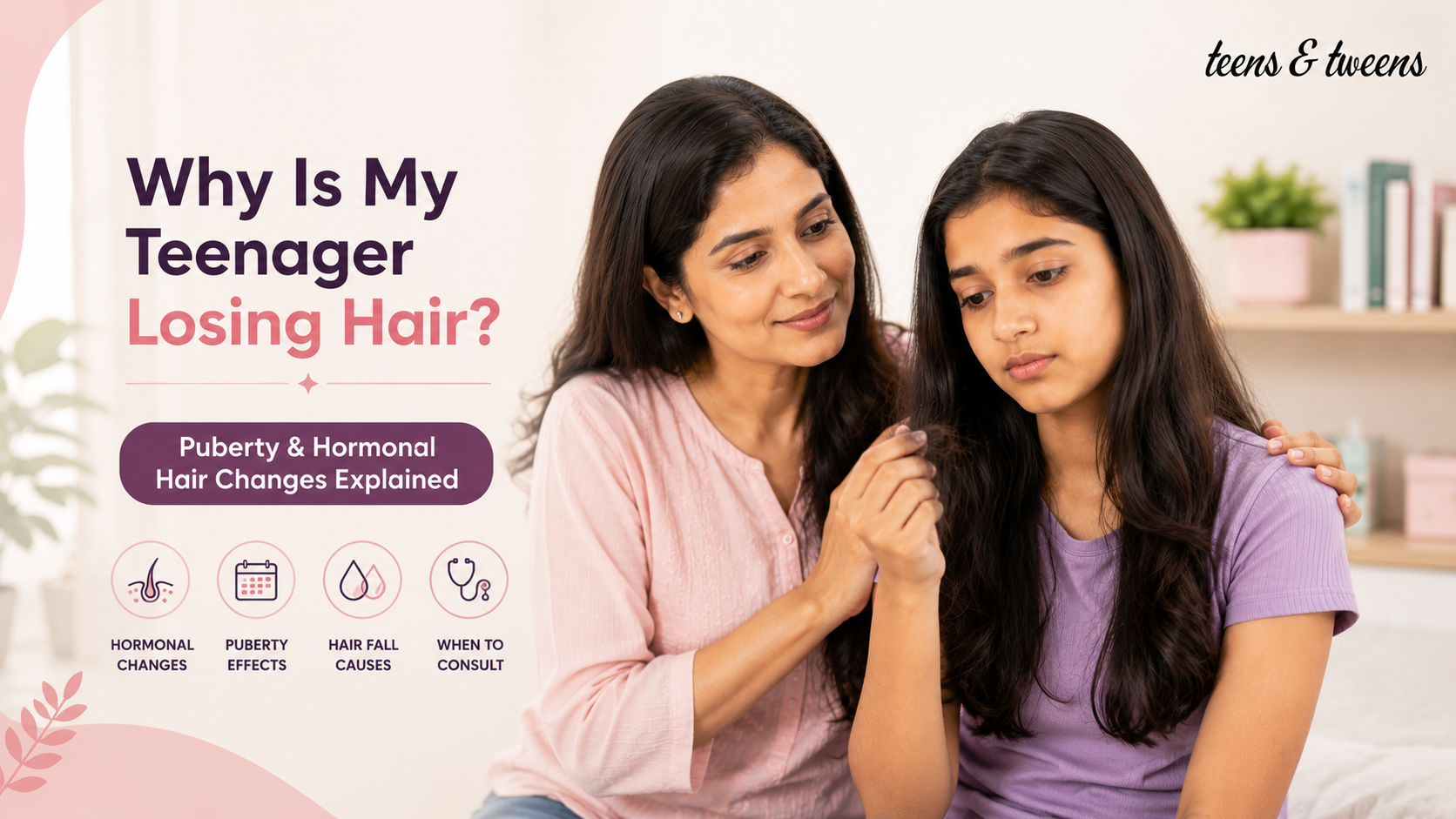
Hair Fall in Teenagers Causes: What Every Parent Should Know
Finding more hair than usual on your teenager’s pillow, hairbrush, or bathroom floor can be worrying. Parents often wonder whether puberty is responsible or whether there may be another reason.
There are several hair fall in teenagers causes, and puberty is only one possible factor. Hormonal changes can affect the scalp and hair, but stress, nutrition, illness, scalp conditions, tight hairstyles, and family history may also contribute to increased shedding or breakage.
A small amount of daily shedding is normal because hair grows in cycles. However, sudden, persistent, or visible thinning deserves attention.
Important: This article provides general information and is not a substitute for medical advice. Persistent, sudden, or significant hair loss should be assessed by a qualified doctor or dermatologist.
How Does Puberty Affect Hair?
Puberty brings changes throughout the body, including changes in the skin and scalp. Hormones can increase oil production, which may make the scalp feel greasy or contribute to dandruff.
Some teenagers notice that their hair becomes oilier, drier, curlier, frizzier, or more difficult to manage. These puberty hair changes can be normal and may not mean that the hair is permanently damaged.
However, changes in texture or oiliness are different from significant hair loss. If the hair looks noticeably thinner, the part appears wider, or bald patches develop, it is important to investigate the cause.
Hair Fall in Teenagers Causes During Puberty
Puberty may affect hair growth patterns because changing hormone levels influence the scalp and hair follicles. This is why many parents search for information about hormonal hair fall puberty.
However, hormones do not explain every case of teenage hair loss. Puberty can occur at the same time as stress, changes in diet, illness, or new hair-care habits. Looking at the complete picture is more useful than assuming that every episode of shedding is caused by hormones.
1. Stress and Emotional Pressure
Teenagers may experience stress related to school, exams, friendships, social media, sports, or changes at home. Major emotional or physical stress can sometimes affect the normal hair-growth cycle.
A high fever, infection, surgery, or another significant physical event may also be followed by increased shedding. The change may become noticeable weeks or months after the event.
Encourage regular sleep, balanced meals, physical activity, and open conversations. These habits support overall well-being and healthy hair.
2. Poor Nutrition or Restrictive Dieting
Teenage years are a period of rapid growth, and the body needs sufficient energy and nutrients.
Skipping meals, following restrictive diets, rapid weight loss, or eating an unbalanced diet may affect hair growth. A varied diet containing protein, fruits, vegetables, whole grains, pulses, dairy or suitable alternatives, nuts, and seeds supports overall health.
Do not start iron, biotin, or other hair supplements without medical advice. Supplements are not suitable for every teenager, and unnecessary supplementation may cause problems.
3. Dandruff and Other Scalp Concerns
Puberty can make the scalp oilier, which may increase dandruff or scalp discomfort. Itching and repeated scratching can contribute to hair breakage.
A gentle shampoo can help keep the scalp clean. However, persistent flakes, redness, pain, severe itching, or scaly patches should be evaluated by a healthcare professional.
A scalp infection can also cause hair loss and may require specific treatment. Hair-care products alone cannot treat an underlying scalp condition.
4. Tight Hairstyles and Hair Breakage
Tight ponytails, braids, buns, and extensions can repeatedly pull on the hair roots. Over time, this tension may contribute to hair loss.
Encourage your teen to:
- Avoid very tight hairstyles every day
- Alternate hairstyles regularly
- Use soft, fabric-covered hair ties
- Avoid aggressive brushing
- Comb gently, especially when hair is wet
- Limit frequent heat styling
It is also useful to understand the difference between shedding and breakage. Shed hair usually comes from the root, while broken hair is shorter and may not have a root bulb.
5. Illness or Medical Conditions
Some hair fall in teenagers causes may be linked to medical conditions. Certain infections, autoimmune conditions, nutritional deficiencies, thyroid concerns, or other health issues can affect hair growth.
For example, smooth, round patches of hair loss are not typical everyday shedding and should be checked by a doctor. A healthcare professional can examine the scalp, ask about symptoms, and decide whether tests are needed.
Avoid diagnosing the cause based only on online photographs or social-media advice.
6. Family History
Some forms of pattern hair thinning can run in families and may begin during the teenage years.
Possible signs include gradual thinning, a widening hair part, or changes around the hairline. If close family members experienced early hair thinning, share this information with the doctor or dermatologist.
Family history does not confirm a diagnosis, but it can be helpful when evaluating teenage hair loss.
Is Hair Fall in a 13-Year-Old Normal?
Parents often search for hair fall in 13 year old because early adolescence is a time of rapid physical and hormonal change.
Seeing some strands during washing or brushing may be normal. Instead of counting individual hairs, observe whether there is a clear change from your teen’s usual hair density.
Pay attention to:
- Sudden or increasing shedding
- A widening hair part
- Visible thinning
- Round or patchy bald areas
- Hair coming out in clumps
- Scalp pain, redness, scaling, or severe itching
- Hair loss with fatigue, weight changes, or other symptoms
If these signs are present, arrange a medical evaluation.
How Parents Can Support Healthy Teen Hair
A simple and consistent routine is usually more useful than using many products.
Encourage your teenager to:
- Wash the scalp regularly with a gentle, age-appropriate shampoo
- Use conditioner on the mid-lengths and ends
- Avoid harsh scrubbing
- Limit excessive heat styling
- Keep hairstyles comfortable rather than tightly pulled
- Eat regular, balanced meals
- Drink enough water
- Get adequate sleep
- Avoid unverified hair-growth remedies
Gentle hair-care products can help keep hair clean, soft, and manageable. However, they cannot cure an underlying medical reason for hair loss.
When Should Parents Consult a Doctor?
Parents should consult a qualified doctor or dermatologist if hair loss is:
- Sudden or rapidly increasing
- Persistent for several weeks
- Causing visible thinning
- Appearing in round or patchy areas
- Accompanied by scalp pain, redness, scaling, or severe itching
- Occurring with fatigue, unexplained weight changes, or other symptoms
Early evaluation can help identify the cause and guide appropriate treatment.
Final Thoughts
Understanding the different hair fall in teenagers causes can help parents respond calmly and avoid assuming that every change is simply part of puberty.
Hormonal changes may affect the scalp and hair, but stress, nutrition, scalp concerns, illness, tight hairstyles, and family history may also play a role. A gentle hair-care routine and healthy daily habits can support overall hair health.
If hair fall is sudden, persistent, worsening, or visibly affecting hair density, consult a qualified doctor or dermatologist. Getting the right assessment is more useful than trying multiple products without knowing the cause.